
PREPARE YOUR CHILD FOR REAL LIFE
A Development Academy for the Abilities Children Need for Life
- Ages 4 - 12 : For Real World Readiness
- PROGRAM OVERVIEW
STEP-1 : On-Field Assessments
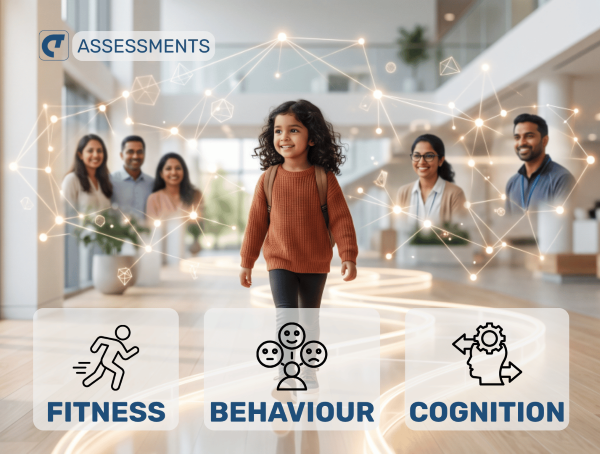
We conduct on-field, science-backed assessments covering:
- Physical fitness
- Behaviour
- Cognitive abilities.
STEP-2: Development Sessions
Engaging, competitive activities and guided challenges to help children practice and develop cognitive, emotional, social, and life skills
- Neuro-Developmental Focus
- Activity-Based Learning
- Dynamic Group Settings
- Psychologist-Designed, Coach-Delivered
STEP-3: Parent Discussion
We don’t just hand you a report. We sit down with you to discuss the findings, aligning the perspectives of parents, coach, and the child to create a unified, individualized development path for your child.

STEP-1
PARENTING IS TOUGH IF YOU DON'T KNOW YOUR CHILD
Transform parenting stress into guided steps by discovering the science behind your child’s unique mind and body.
Three-Layer Interpretation of Fitness
1. Physical Capacity
What can the child physically do?
Physical capacity includes strength, endurance, speed, agility, power, flexibility and coordination.
2. Cognitive-Motor Skills
How does the child think while moving?
Cognitive-motor skills include reaction, attention, motor planning, spatial awareness, sequencing, timing, adaptability and decision making.
3. Behaviour During Performance
How does the child respond to the challenge?
Behaviour during performance includes persistence, effort, self-regulation, following instructions, response to feedback, confidence, frustration tolerance and willingness to try.
A Behavior Spectrum is the complete range of how a child acts, reacts, and adapts depending on their environment, their emotions, and the people around them.
Instead of locking a child into a rigid label—like calling them simply “shy,” “hyper,” or “stubborn”—a spectrum recognizes that a child’s behavior is fluid. It helps parents understand that a child who is deeply withdrawn and quiet in a bustling classroom might be a vocal, natural leader on the sports field. The spectrum is the full map of their personality in motion, showing not just what they do, but where and why they do it.
What is Cognition?
In the simplest terms, cognition is the process of thinking, learning, and understanding.
If you imagine a child’s brain as a highly advanced computer, cognition is the operating system running in the background. It is the continuous, invisible process of how a child takes in information from the world around them (through seeing, hearing, playing, and interacting), makes sense of it, and decides what to do with it.
What are Cognitive Abilities?
These are the “mental muscles” a child uses constantly—whether they are solving a math problem, following a coach’s strategy on the sports field, or navigating a complex social disagreement with a friend.
STEP-2.0
The real world is not in books or online.
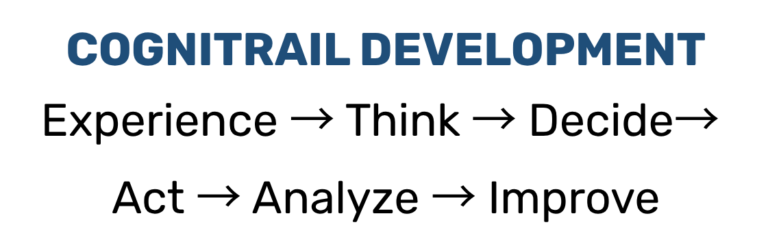
Personality Isn’t Changed by a crash Course. It Develops Through Real Experiences.

- Designed By Psychologists
2.1
Its not just about the skill... It never was
Knowledge is potential. Applying it under pressure is performance.
- Perform at True Potential
Moving from Theory to “On-Field Reality
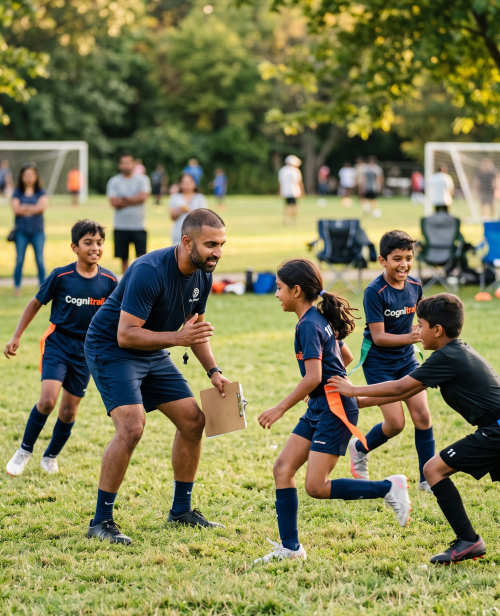
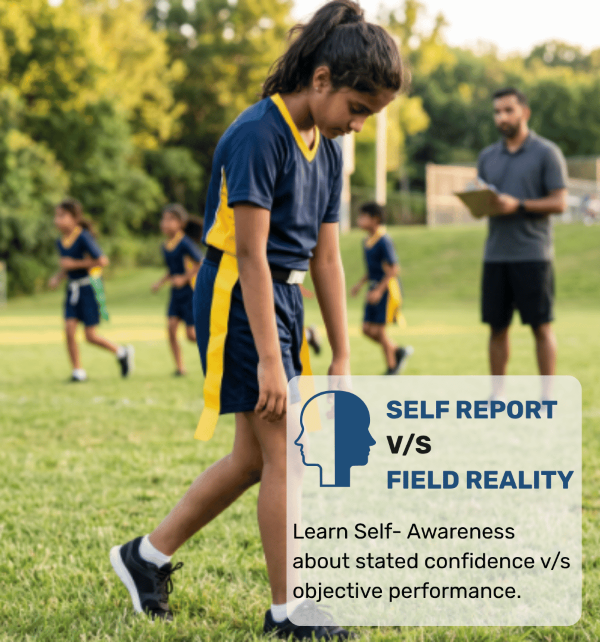
A child might know the “right” answer when asked how to handle a disagreement, but their true behavior emerges when they are exhausted, losing a game, or facing an unexpected hurdle. Cognitrail sessions use physical exertion and unscripted teamwork to strip away rehearsed answers. This bridges the critical gap between a child’s self-perception and how they actually operate in reality.
Designing “Safe Failures”
The activities are intentionally designed to be challenging enough that the child will face setbacks. Whether it is a complex physical drill, a reaction-speed test, or a live decision-making scenario with peers, the pressure is real.
The Trigger: We want to see what happens when the child’s initial plan fails. Do they blame others? Do they shut down? Or do they adapt?
The Value: Experiencing this frustration in a controlled environment prevents these “conflict areas” from becoming major behavioral issues later in life.
Guided Emotional Control
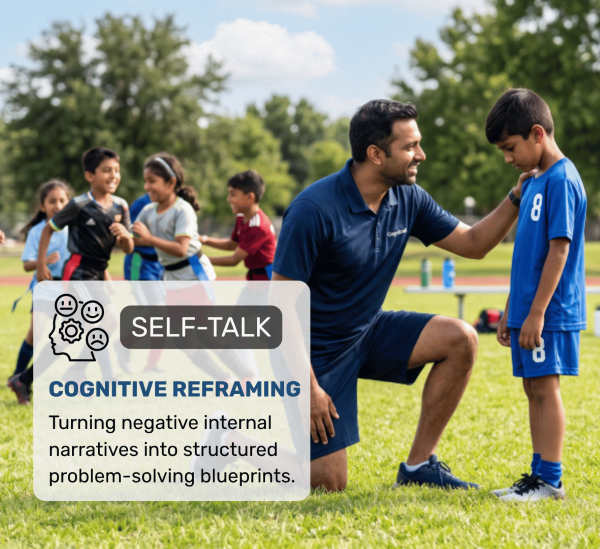
The most important part of this controlled pressure is that the child is never left to navigate it alone. Instead of reactive discipline (“stop crying and play”), trained professionals actively observe the child’s response to the stressor. When a child hits a breaking point or a cognitive bottleneck, the coach guides them through the failure in real-time.
They help the child process the frustration, reframe the obstacle, and try again. This repeated cycle of facing a challenge, managing the emotional spike, and overcoming it is how deep, lasting emotional control is forged.
You dont ignore child's visible scars… but emotional struggles ??
One single incident can spark self belief or create trauma. how will your child respond ?
- Overcome Fear of Failure
Immediate guided conversations within minutes of setbacks in activities, converting panic into analytical reflection before emotional anchoring sets in.
Teaching you child to identify physiological stress triggers—shallow breathing, muscle constriction—and deploy grounding micro-habits on demand.
Mentors guide children to isolate factors within their control versus external noise, reinforcing self-efficacy over helplessness.

STEP-3
Real developement takes time and a team.
Providing the actionable guidance to turn everyday guesswork into a clear, unified growth plan for the child.
Rather than looking at traits in isolation, the discussion connects physical fitness, behavior, personality traits, and cognitive abilities. For example, we might discuss how a physical trait, like core strength or stamina, is directly impacting their cognitive focus or reactions during academic tasks.
While short-term goals handle the day-to-day, long-term goals are about shaping the overall trajectory of the child’s life.
Holistic Growth: Instead of just aiming for generic academic success, goals focus on building emotionally resilient, adaptable, and critical-thinking individuals.
Bridging the Gap: Over time, the consistent completion of short-term goals bridges the gap toward these larger outcomes. Improving a child’s processing speed and emotional regulation (short-term) naturally builds their self-esteem and independence (long-term).
Future Leadership: By objectively identifying where a child naturally excels, parents can set long-term goals that lean into those strengths, nurturing future leadership skills and overall productivity.
Ultimately, these goals are never static. Through ongoing Sessions and continuous Tracking, the child’s growth is constantly monitored. As the child develops, the baseline shifts, and the goals adapt—ensuring the path forward is always clear, relevant, and scientifically supported.
A professional breaks down the data, explains the “why” behind the child’s behaviors, and collaborates with the parents to create a realistic plan. Moving into the Conducting Sessions and Achieve Growth and Tracking phases, the child’s progress is continuously monitored. If a strategy isn’t working—or if the child masters a skill and is ready for the next challenge—the plan is actively updated, keeping the development path relevant and scientifically supported.
Aditya Patanjali
Counseling Psychologist | High-Performance Coach
With over 15 years of experience across child development, sports education and performance psychology, Aditya brings together the disciplines of psychology, sport and experiential learning to understand how children develop and what helps them thrive.
Connecting Multiple Prospectives Together :
Psychology + Coaching + Sports Science + Analytics
Aditya holds a Master’s Degree in Counseling Psychology and a Certificate in Psychology in High Performance Sports. He is also an FIFA C Licence football coach, with certifications in Scouting & Analysis and Sports Data Analytics.
His professional journey spans organisations including Barça Academy, The Heritage Schools and I-League football clubs, along with extensive work as a Sports Psychologist across leading sports academies. He also works as a Performance Psychology & Gamification Consultant at Live Leadership and continues to work with professional athletes and coaches as a High-Performance Coach.
His philosophy is simple: every child is different, and meaningful development begins when we understand the child before trying to change them.
- More about Cognitrail